
How to Check a Token's Early Buyers
Early Buyers lists the first wallets into a coin, what each one paid and whether it still holds. Those three facts say a lot about who can sell on you. Here is how to read the list and what to check beside it.
 Updated November 24, 2026
On this page
What the list answers
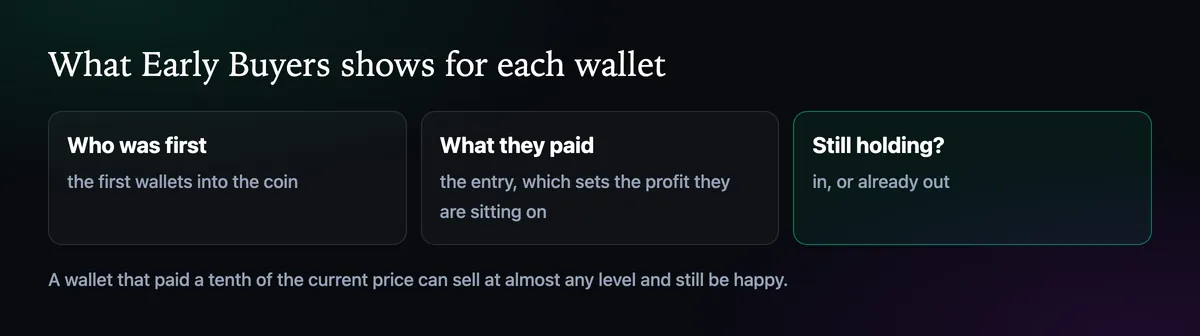
Early Buyers works on any coin. For each of the first wallets you get its entry and its status: still in, or out. The entry matters because it sets the profit that wallet is sitting on. Someone who paid a tenth of the current price can sell at almost any level and still walk away happy.
Start with who still holds
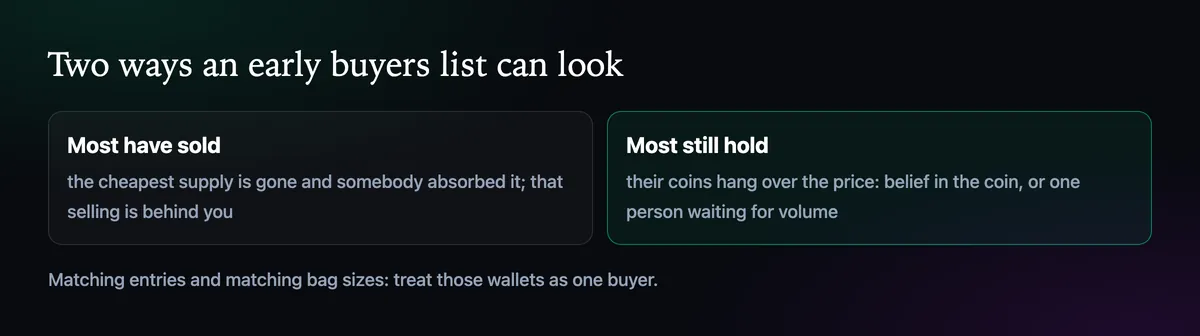
If most of the first buyers are gone, the cheapest supply has already been sold and somebody absorbed it. That selling is behind you. If most are still in, their coins hang over the price. It can mean they believe in the coin. It can also mean one person with ten wallets waiting for enough volume to exit. My rule: early wallets with matching entries and matching bag sizes are one buyer until something shows otherwise.
Measure the gap to the current price
Compare what the early wallets paid with where the coin trades now. When the gap is small, they are close to break even and have little reason to dump. When the gap is wide and nobody has sold, the first large sell tends to start a queue, and you do not want to be the bid under it. Size down or wait for them to take profit first.
Check the same wallets on the rest of the page
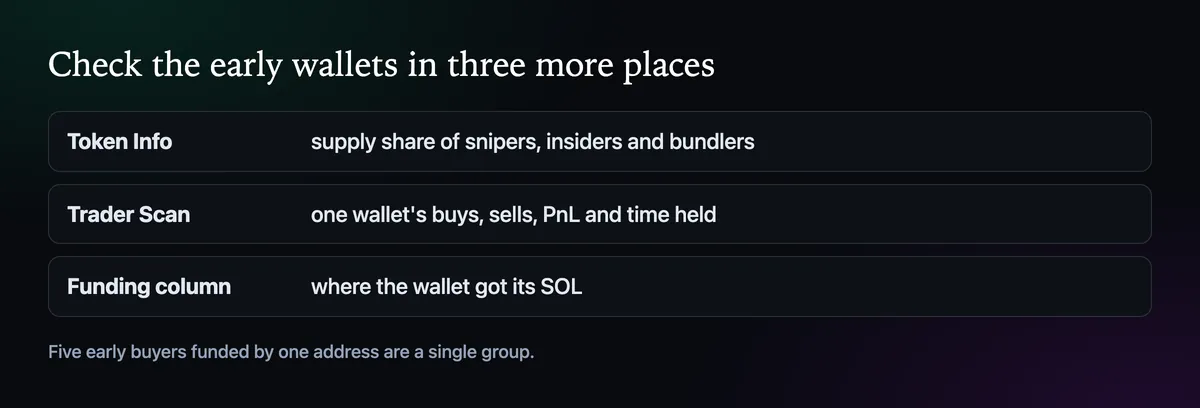
Token Info gives the supply share of snipers, insiders and bundlers, and How to Read Holder, Dev and Bundle Data explains each one. High shares there plus early buyers who never sold means concentrated supply. Next, find an early wallet in the Holders or Top Traders tab and click it. How to Use Trader Scan covers what opens: its buys, sells, PnL and time held. The Funding column beside it names where the wallet got its SOL. Five early buyers funded by one address are a single group.
Where the list stops being useful
Being early is different from being right. Bots buy every launch in the first second and lose on most of them. A wallet shown as out may also have moved its coins to a fresh address instead of selling. When one early wallet keeps appearing first on coins that go on to run, add it to your tracker and watch it for a few weeks; the wallet tracking guide has the steps.

Written by Mohammad Shahpari · Web3 CMO, Crypto Growth & SEO Specialist · X · LinkedIn
Did this answer your question?