
How to Set the Priority Fee and Bribe
The priority fee and the bribe are two tips Axiom attaches to every Solana transaction to get it into a block sooner. Both default to 0.001 SOL. Here is what each one does and when paying more is worth it.
 Updated November 9, 2026
On this page
What the two fees pay for
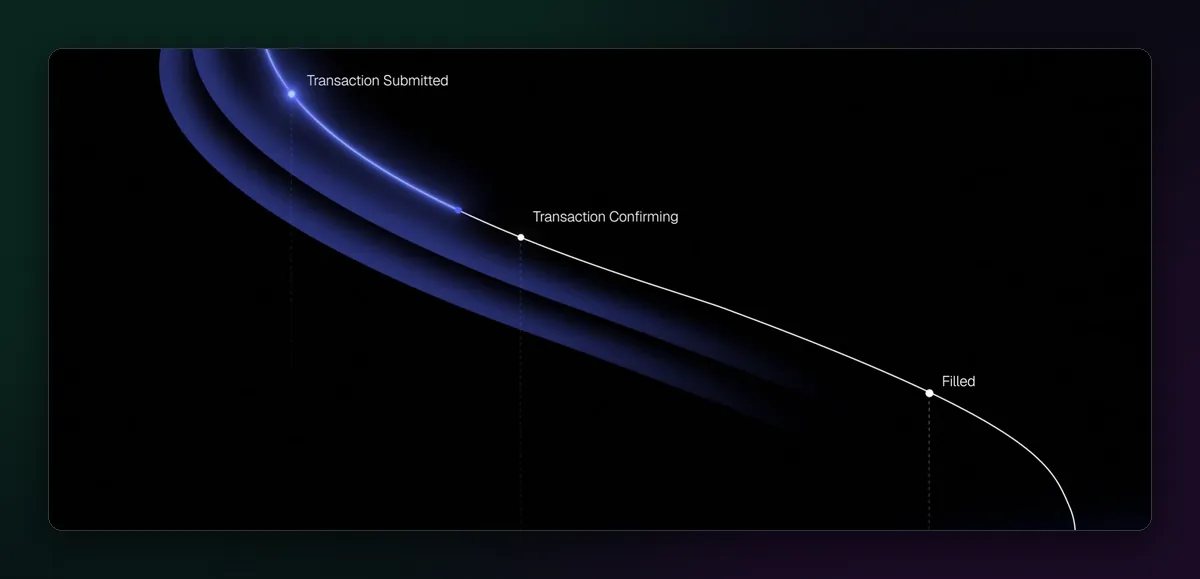
A Solana block has limited room, and validators fill it with whatever pays best. Your trade competes with everyone else's for a place in the next block or two. On a quiet coin the defaults win easily. On a launch that half the market is trying to buy, a trade with the default tip can land a few blocks late, which on a memecoin can mean a price 50% higher.
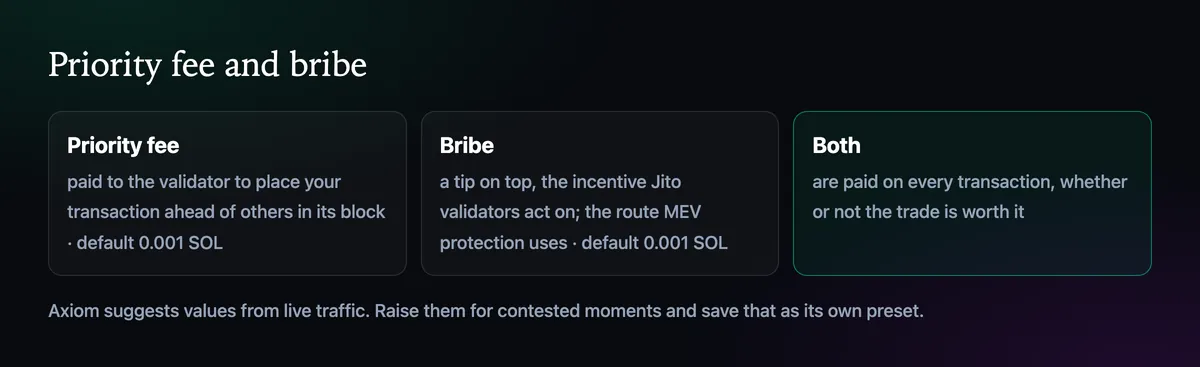
The priority fee goes to the validator and places your transaction ahead of others in its block. The bribe is a second tip, the incentive Jito-run validators act on, and it is what MEV protection travels on. Axiom recommends values from live network traffic, and its docs suggest the bribe for high-volume trades in particular.
Where to set them
Both sit next to slippage in each preset, under Buy Settings and Sell Settings in Trading Settings. Type the amount in SOL. The settings line under the buy buttons shows them in use, and a yellow warning sign can appear beside a value, which is worth a look before you trade; How to Set Up Trading Presets shows the whole window.
The MEV mode decides the route
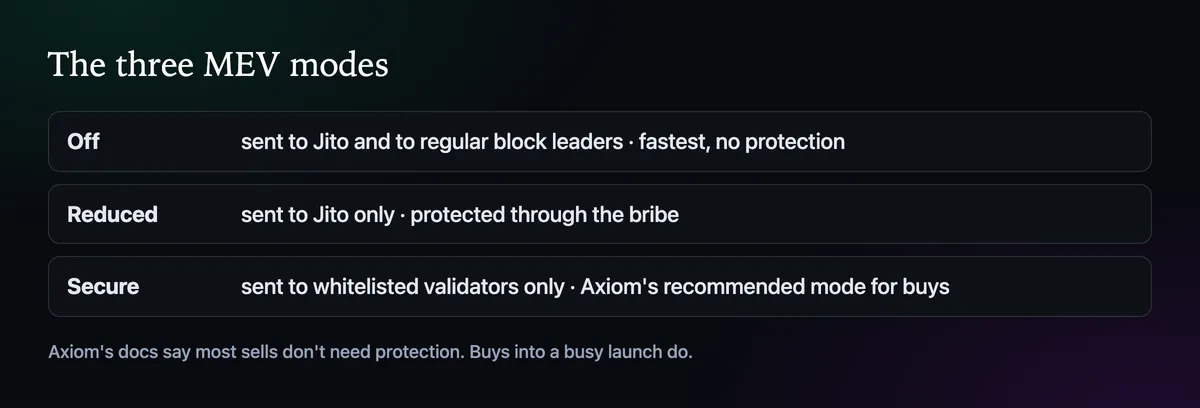
Off sends the transaction to Jito and to ordinary block leaders together, which is fastest and leaves it visible to sandwich bots. Reduced sends it through Jito only. Secure limits it to whitelisted validators, and it is the mode Axiom recommends for buys. The docs add that most sells don't need protection at all.
When paying more is worth it
- Worth it: a launch or migration you have planned for, a sell into a coin that is collapsing, any moment when a few seconds change the price a lot.
- Not worth it: ordinary buys of established coins, and small trades, where a 0.02 SOL tip can cost more than the move you are chasing.
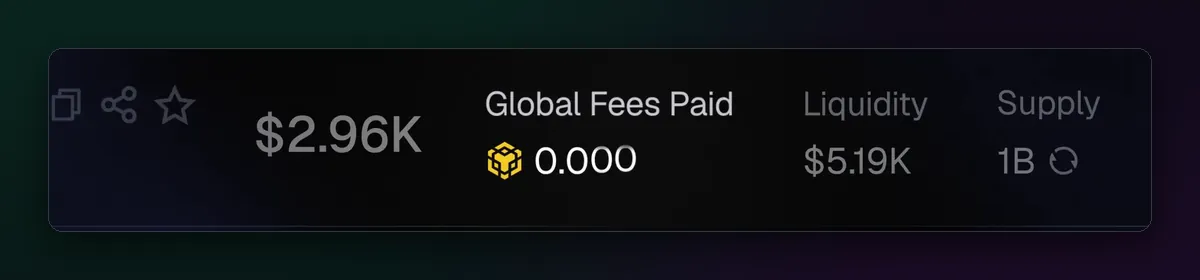
The token header shows Global Fees Paid, what every trader on the coin has spent on priority fees and tips so far. A big number on a young coin means you are bidding against a crowd and the defaults probably won't land. A small one means you can keep your fees low. The best Axiom settings page has more on matching fees to the market.

Written by Mohammad Shahpari · Web3 CMO, Crypto Growth & SEO Specialist · X · LinkedIn
Did this answer your question?