
Is Axiom Custodial? How Your Wallet Keys Work
Axiom is non-custodial: the wallets it creates for you are yours, their keys are handled through Turnkey's infrastructure instead of sitting with Axiom, and an export option hands them to you at any moment. Here is what that means in practice, how to check it yourself, and what it does not protect you from.
 Updated November 14, 2026
On this page
Who holds what
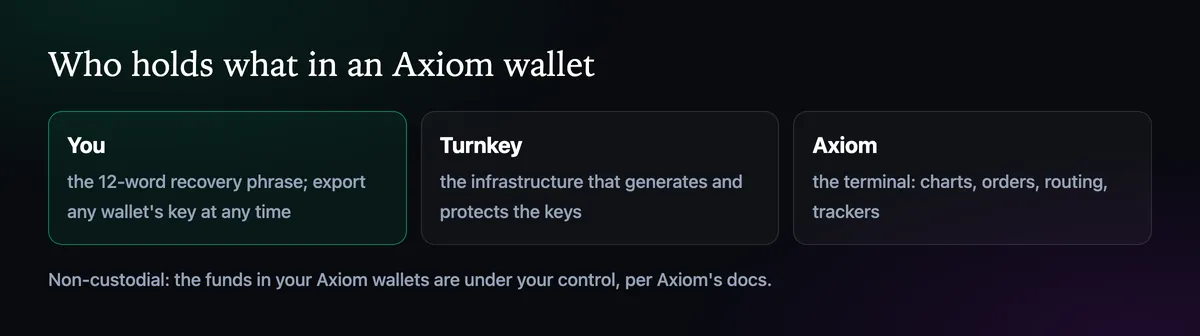
When you sign up, Axiom creates wallets for you through its partner Turnkey, which runs the infrastructure that generates and protects the keys. You get a 12-word recovery phrase at sign-up, it can be viewed again in settings, and each wallet's private key can be exported from there at any time. Axiom's own docs put it plainly: the assets in those wallets are in your control and nobody else's. Axiom supplies the terminal and the trading, not a vault.
Check it yourself
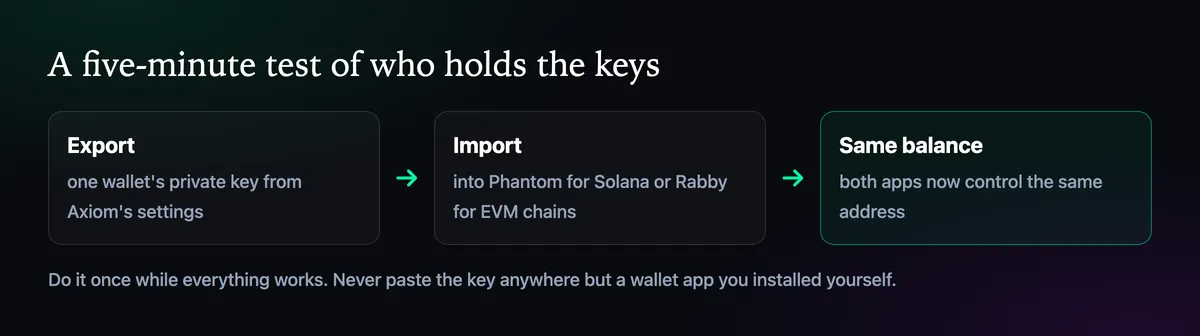
Non-custodial is easy to test. Export the private key of one wallet, import it into Phantom for Solana or Rabby for an EVM chain, and the same balance appears there. From then on both apps control the same address. Do it once while everything works, so you know the backup is real; How to Export Your Axiom Private Key and the recovery phrase article, How to Back Up Your Axiom Recovery Phrase, cover both halves of that.
What non-custodial does not cover
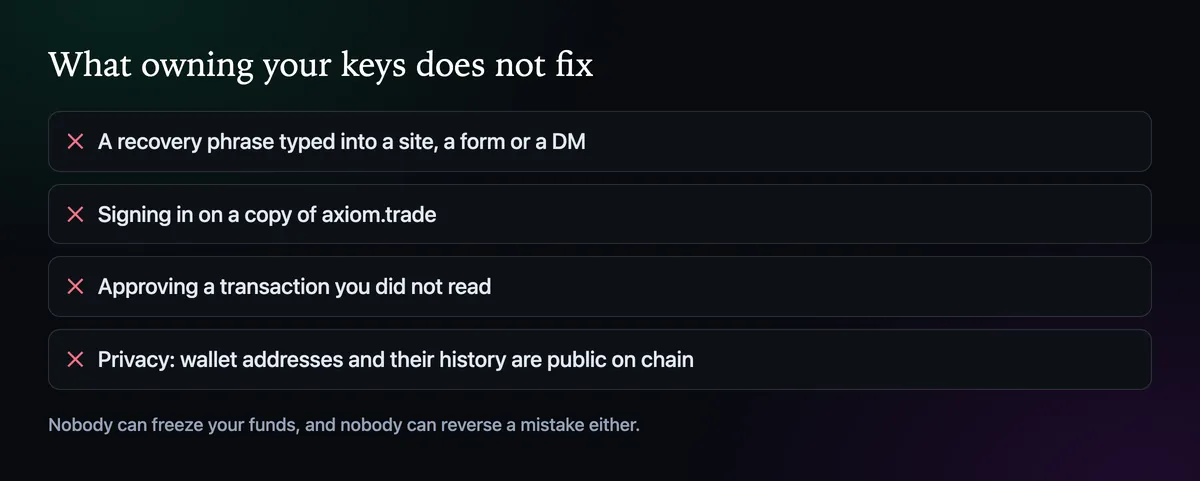
Owning the keys means nobody can freeze or reverse your funds, and that cuts both ways. If your phrase leaks, if you sign in on a copy of the site, or if you approve a malicious transaction, nobody can undo it. Privacy is a separate matter as well: in February 2026 Axiom said a team member had misused internal support tools to look up users' wallets, and that access to those tools had been removed. Your funds stay yours, but your addresses are public on chain, and that incident is a reminder to keep large holdings in a wallet you use only for saving.
How it differs from an exchange account
On an exchange, the company holds the coins and you hold a claim on them: withdrawals need its approval, and an account can be frozen. In Axiom, the coins sit in wallets you can take anywhere, there is no identity check to sign up, and no one has to approve a withdrawal. More on the wallet itself is on the Axiom wallet page.

Written by Mohammad Shahpari · Web3 CMO, Crypto Growth & SEO Specialist · X · LinkedIn
Did this answer your question?