
How Leverage and Liquidation Price Work on Axiom
A perp on Axiom is liquidated when the money behind it drops below Hyperliquid's maintenance margin. Leverage decides how close that line sits to your entry, and the margin mode decides how much of your balance goes down with it. Here is how the numbers work.
 Updated November 17, 2026
On this page
The line you must not cross
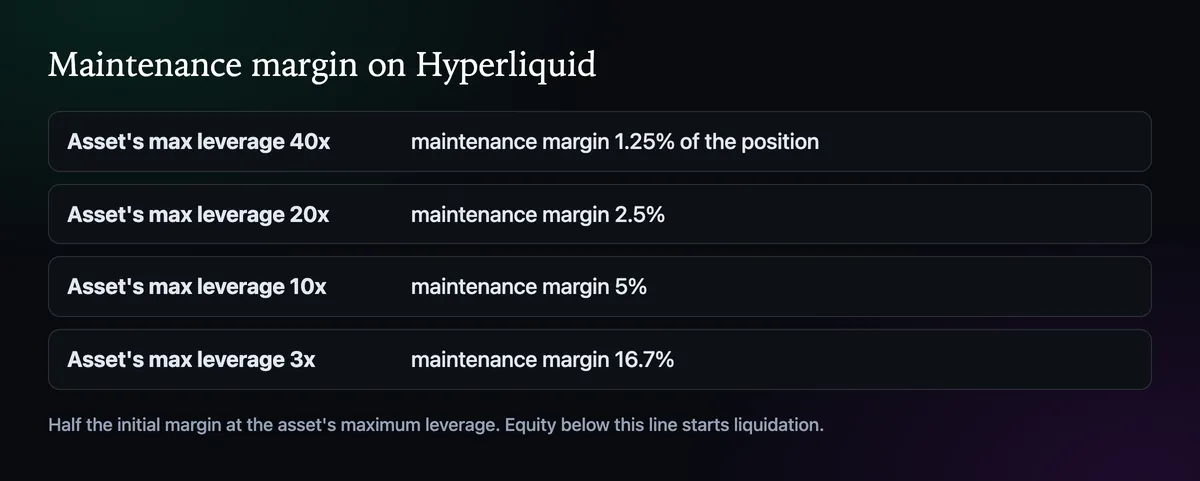
Every perp on Hyperliquid has a maximum leverage, from 3x to 40x depending on the asset. The maintenance margin is half of what you would put up at that maximum: 1.25% of the position on a 40x market, 2.5% on a 20x market and 16.7% on a 3x market. When the equity behind your position falls below that amount, liquidation starts.
What leverage changes
The margin needed to open is the position size times the price, divided by your leverage. A 1,000 USDC position at 10x takes 100 USDC; at 20x it takes 50. Less margin means the price has less room before equity reaches the maintenance line. On an isolated 10x position in a market with 2.5% maintenance, a move of roughly 7.5% against you is enough, before fees and funding. Raise it to 20x and the same market needs only about 2.5%. The panel shows an estimate before you trade; How to Open a Long or Short on Axiom has the side-by-side example.
Cross or isolated margin
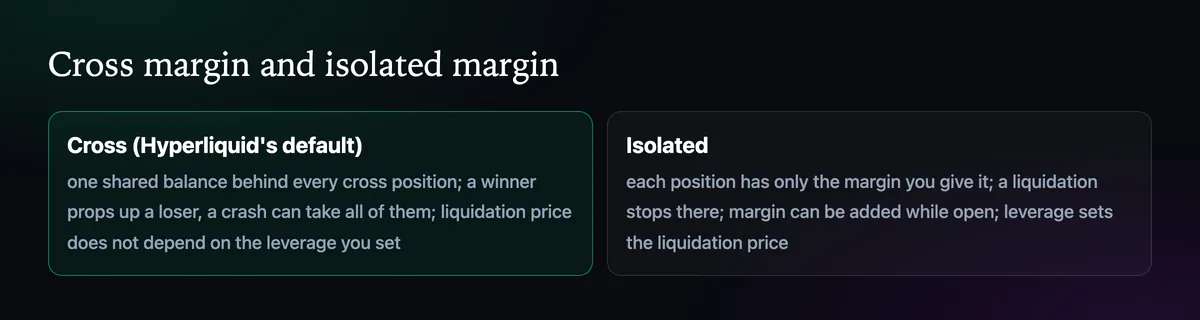
Hyperliquid has two margin modes, and cross is its default. All cross positions draw on one shared balance, so a winner helps carry a loser, but a bad enough move can take every cross position down together. Isolated margin gives a position only the margin you assign it; if it is liquidated, the rest of your account is untouched, and you can add margin to it while it is open. With cross margin the liquidation price does not move with the leverage you pick; with isolated margin it does, because leverage sets how much margin the position gets. Check which mode a position uses before you count on either behaviour.
It is the mark price that counts
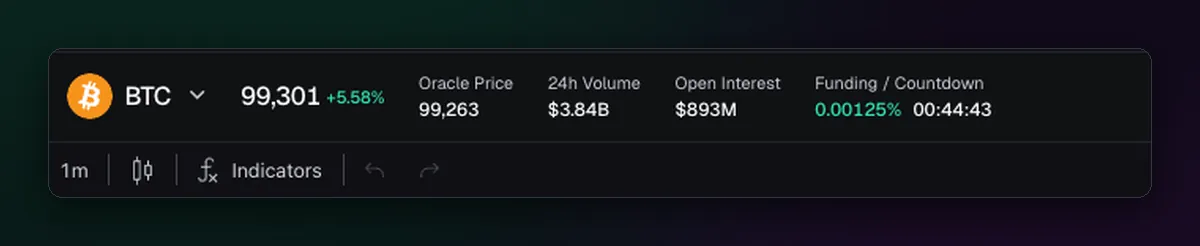
Liquidations use Hyperliquid's mark price, built from prices on large exchanges and its own order book, rather than the last trade. In a fast market it can differ from what the book shows. Funding matters as well: payments change your margin a little at a time, so a liquidation price shown on Monday can sit somewhere else by Friday.
What happens at the line
Hyperliquid first tries to close the position with market orders on its book. If that works, whatever collateral is left stays yours. Positions above 100,000 USDC are closed 20% at a time. If equity drops below two thirds of the maintenance margin before the book can absorb it, a backstop vault takes the position over and the maintenance margin is not returned. A stop loss set clearly before that point keeps the decision in your hands, which is the subject of How to Set Take Profit and Stop Loss on a Perp. More on Axiom's perps is on the perpetuals page.

Written by Mohammad Shahpari · Web3 CMO, Crypto Growth & SEO Specialist · X · LinkedIn
Did this answer your question?