
How to Stake SOL on Axiom for axiSOL
axiSOL is the token you receive when you stake SOL inside Axiom. Your SOL goes to work with Axiom's validator, earning staking and MEV rewards, and the axiSOL stays in your wallet, worth a little more SOL as those rewards come in. Here is how to stake, what it costs and how to get out.
 Updated November 20, 2026
On this page
Open the Yield tab
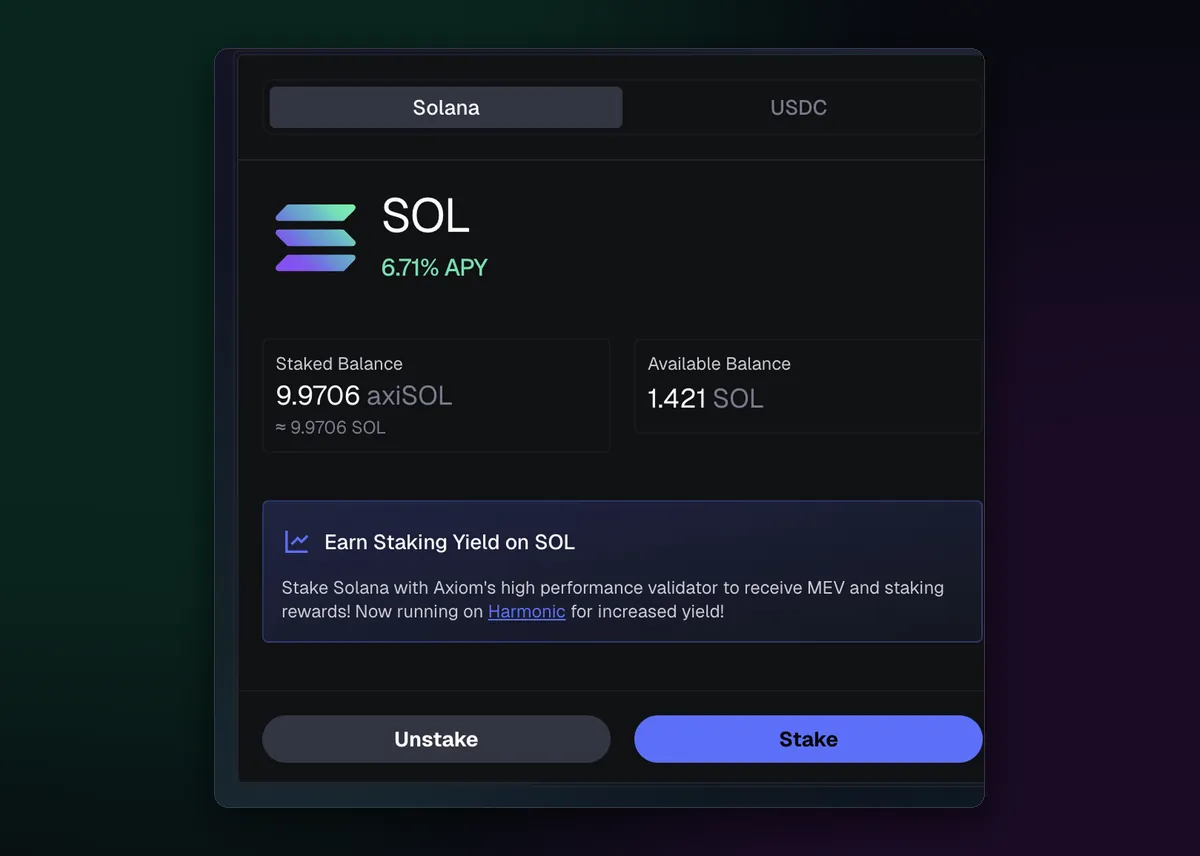
Yield sits in the top bar of the terminal. Its Solana tab shows the current rate as an APY, your staked balance in axiSOL with its SOL value underneath, and the SOL available to stake. The rate in Axiom's own screenshot was 6.71%; it moves with Solana's rewards and the MEV the validator earns, so read the live number rather than ours.
Stake, and what you get back
Type an amount and press Stake. The SOL goes into a stake pool run by Solana's audited Stake Pool Program, and you receive axiSOL in return. The pool delegates to Axiom's validator, which runs Harmonic to squeeze more out of each block, and the docs put the pool above 400,000 SOL. Because axiSOL is an ordinary token, it sits in your Axiom wallet like any other.
How the rewards show up
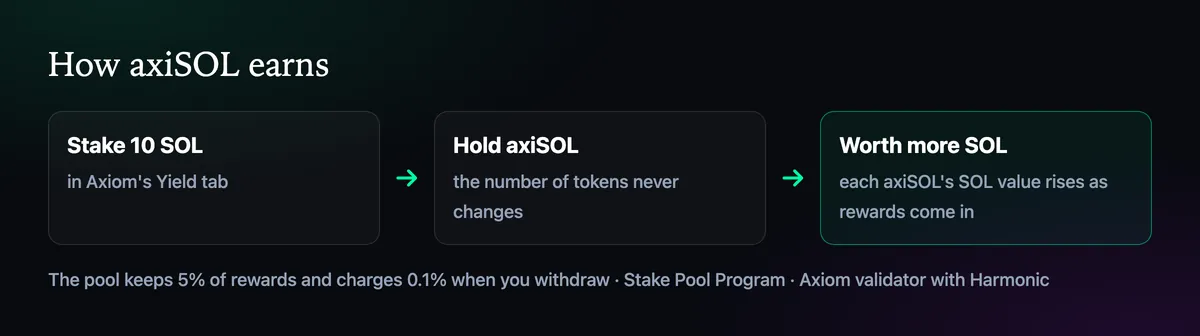
You will not see new tokens arrive. The number of axiSOL you hold stays fixed, and each one becomes worth slightly more SOL as rewards are added to the pool. The pool keeps 5% of those rewards to pay for running it, so you receive the other 95%. The SOL value under your staked balance is the figure to watch.
Unstaking
Unstake is in the same window. The pool charges 0.1% on the SOL you take out, a small fee meant to stop people gaming the exchange rate. The docs do not promise a time for unstaking, so do not stake the SOL you might need for a trade in the next hour.
Keep some SOL unstaked
Every trade and transfer on Solana needs a little SOL for fees, and axiSOL cannot pay them. Leave enough unstaked for a day of normal trading. If you would rather not pay the 5% at all, How to Stake to the Axiom Validator from Phantom or Ledger covers the direct route, and axiSOL or Direct Staking: Fees and Withdrawals Compared weighs the two. The wider picture is on the yield and staking page.

Written by Mohammad Shahpari · Web3 CMO, Crypto Growth & SEO Specialist · X · LinkedIn
Did this answer your question?